Research Mission
GENNIE Lab is an omics × AI research lab.
We connect —from genomes and molecular profiles to electronic health records, everyday behavior, and social environments—to uncover and into clinical practice and everyday life for and .
GENNIE Lab은 다양한 의생명 데이터를 인공지능으로 연결하여 인간의 건강을 이해하는 Biomedical AI 연구실입니다. 삼성서울병원과 성균관대학교를 잇는 임상현장 속 연구 환경을 기반으로, 유전체와 멀티오믹스, 전자의무기록(EHR), 일상에서 생성되는 라이프로깅, 사회환경 데이터를 함께 분석하여 건강을 분자에서 임상, 일상, 사회에 이르는 여러 층위에서 살펴봅니다. 이러한 멀티모달 데이터에 최신 머신러닝과 인공지능 기법을 적용하여 건강과 질병의 원인 및 개인별 이질성을 규명하고, 개인에게 최적화된 예방과 치료의 근거를 만들어 정밀건강과 건강수명 연장으로 연결합니다.
Scientific Pillars
Multimodal BioAI & Foundation Models
멀티모달 바이오AI와 파운데이션 모델
We develop AI and foundation models that learn jointly from DNA sequences, multi-omics profiles, neuroimaging, clinical text, and longitudinal data—integrating modalities usually analyzed in isolation. The result is reusable biological representations that uncover cross-modal structure and transfer across diseases and populations.
DNA 유전체, 멀티오믹스(단백체, 마이크로바이옴 등), 뇌영상, 임상기록(EHR), 일상 행동 데이터를 함께 학습하는 의생명 특화 AI 모델을 구축합니다. 그동안 따로 분석되던 데이터를 하나로 묶어, 여러 질환과 인구집단에 활용할 수 있는 생물학적·의료적 표현(representation)을 얻고 이를 다양한 정밀의료 과제에 적용합니다.
Genomic AI, biological foundation models, clinical LLMs, imaging and EHR integration
Genome-to-Phenome Science
생명과학의 설계도(Genome)에서 생명의 실체(Phenome)로의 통합적 규명
We map the genetic and molecular architecture of complex traits across diverse, multi-ancestry populations. Integrating GWAS, fine-mapping, polygenic scores, PheWAS, Mendelian randomization, and multi-omics, we translate genomic signals into biological mechanisms and clinically meaningful phenotypes.
인간의 복합형질과 질병이 어떤 유전적, 분자적 구조를 갖는지 규명합니다. GWAS, 다유전자위험점수(polygenic risk score), PheWAS, 멘델리안 무작위분석을 활용하고, 멀티오믹스에는 네트워크와 클러스터링 기반 모델링을 함께 적용하여, 유전체 신호가 어떤 생물학적 기전을 거쳐 임상 표현형과 행동으로 나타나는지 설명합니다.
Population genomics, statistical genetics, multi-omics, and molecular discovery
Causal Precision Health
인과추론에 기반한 정밀의료 실현
We move beyond predicting who is at risk to determine what works, for whom, and under which conditions. Using causal inference, double machine learning, and generalized random forests, we estimate heterogeneous treatment and exposure effects—turning population-level evidence into individualized decisions.
"누가 위험한가"를 예측하는 데서 그치지 않고, "무엇이 누구에게 어떤 조건에서 효과가 있는가"를 심도 있게 규명합니다. 이중기계학습(double ML), 인과 숲(causal forest)처럼 머신러닝과 딥러닝을 결합한 최신 인과추론 기법으로 치료와 노출의 효과가 개인마다 얼마나 다른지 추정하여, 집단 평균에 머물던 근거가 개인 단위의 맞춤형 임상 의사결정으로 이어지게 합니다.
Causal Machine Learning, Mendelian randomization, and heterogeneous treatment effects for smarter choices in health & beyond
Everyday Health Intelligence
정밀 웰니스와 건강한 노화
We connect patient-generated health data(PGHD), lifelog, and multi-omics with clinical outcomes to track how health is maintained day to day. By turning continuous signals into molecularly informed, personalized guidance, we move care upstream—from treating disease to optimizing everyday wellness, skin and metabolic health, and healthy aging.
스마트워치 및 웨어러블 기반 개인생성건강데이터(PGHD), 라이프로그, 멀티오믹스를 임상결과와 연결하여 건강한 사람을 어떻게 더 건강하게 만들 수 있는지 '건강생성(salutogenesis)'의 관점에서 규명합니다. 쉼 없이 쌓이는 신호를 분자 정보에 근거한 개인 맞춤 가이드로 바꾸어, 병이 생긴 뒤 치료하는 단계보다 앞선 시점에서 일상의 웰니스, 피부 건강, 대사 건강, 건강한 노화를 관리합니다.
Digital & Molecular Wellness, Precision Wellness, Healthy Aging, Wearables, PGHD, digital phenotyping, biological aging, resilience, and salutogenesis
Signature Research Domains
Precision Psychiatry & Neurogenomics
정밀정신의학과 신경유전체학
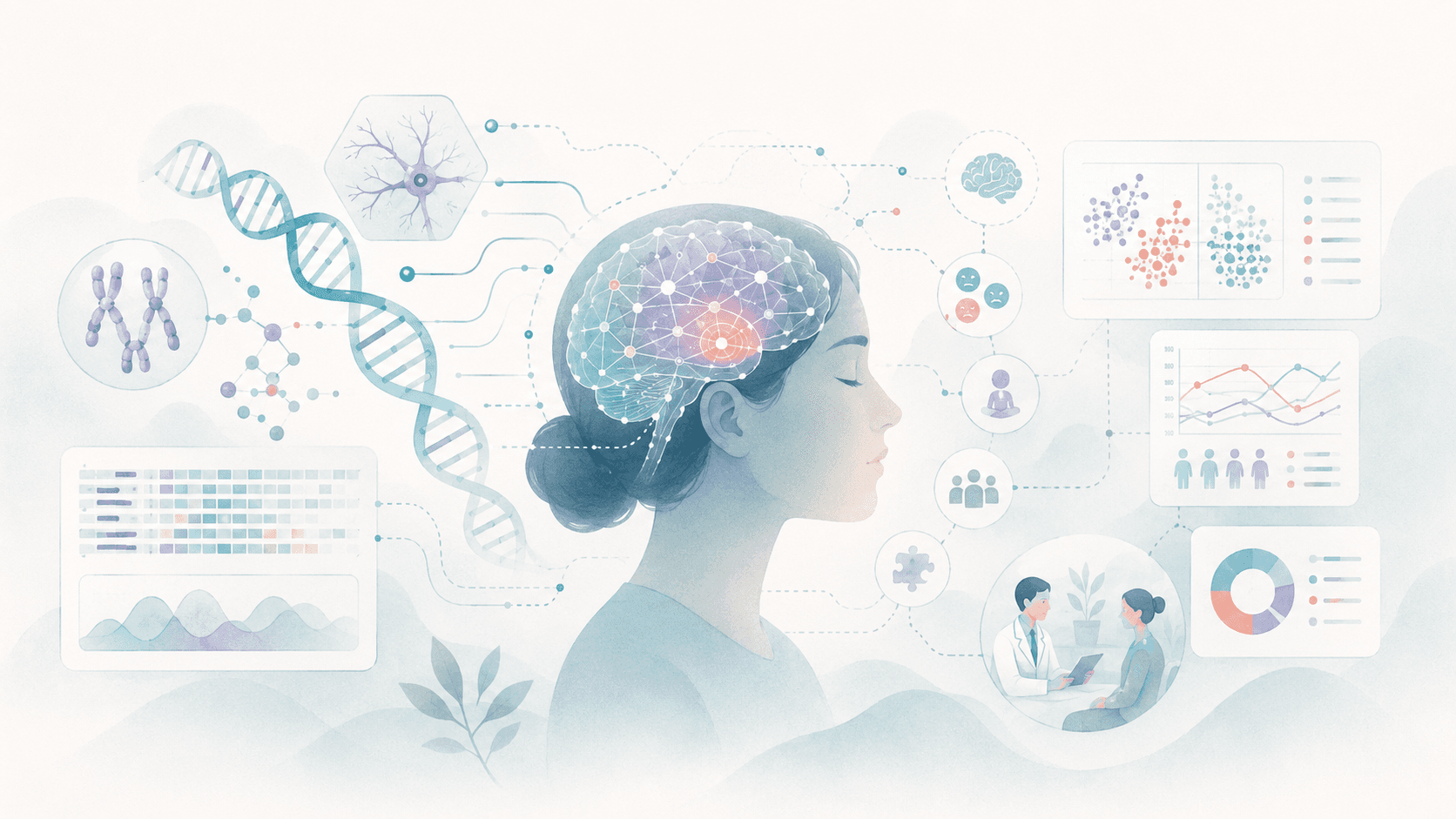
We study the genetic and multimodal basis of psychiatric and cognitive outcomes—depression, bipolar disorder, suicidal behavior, and cognition—integrating genomics with neuroimaging and clinical data to advance diagnosis and individualized treatment.
우울증, 양극성장애, 자살행동, 인지능력처럼 정신과 인지에 관한 표현형이 어떤 유전적 기반을 갖는지, 여러 데이터를 함께 보아 규명합니다. 유전체를 뇌영상과 임상데이터에 연결하여 진단의 정확도를 높이고 개인에게 맞는 치료 방향을 찾습니다.
Sociogenomics & Population Health
사회유전체학과 집단건강
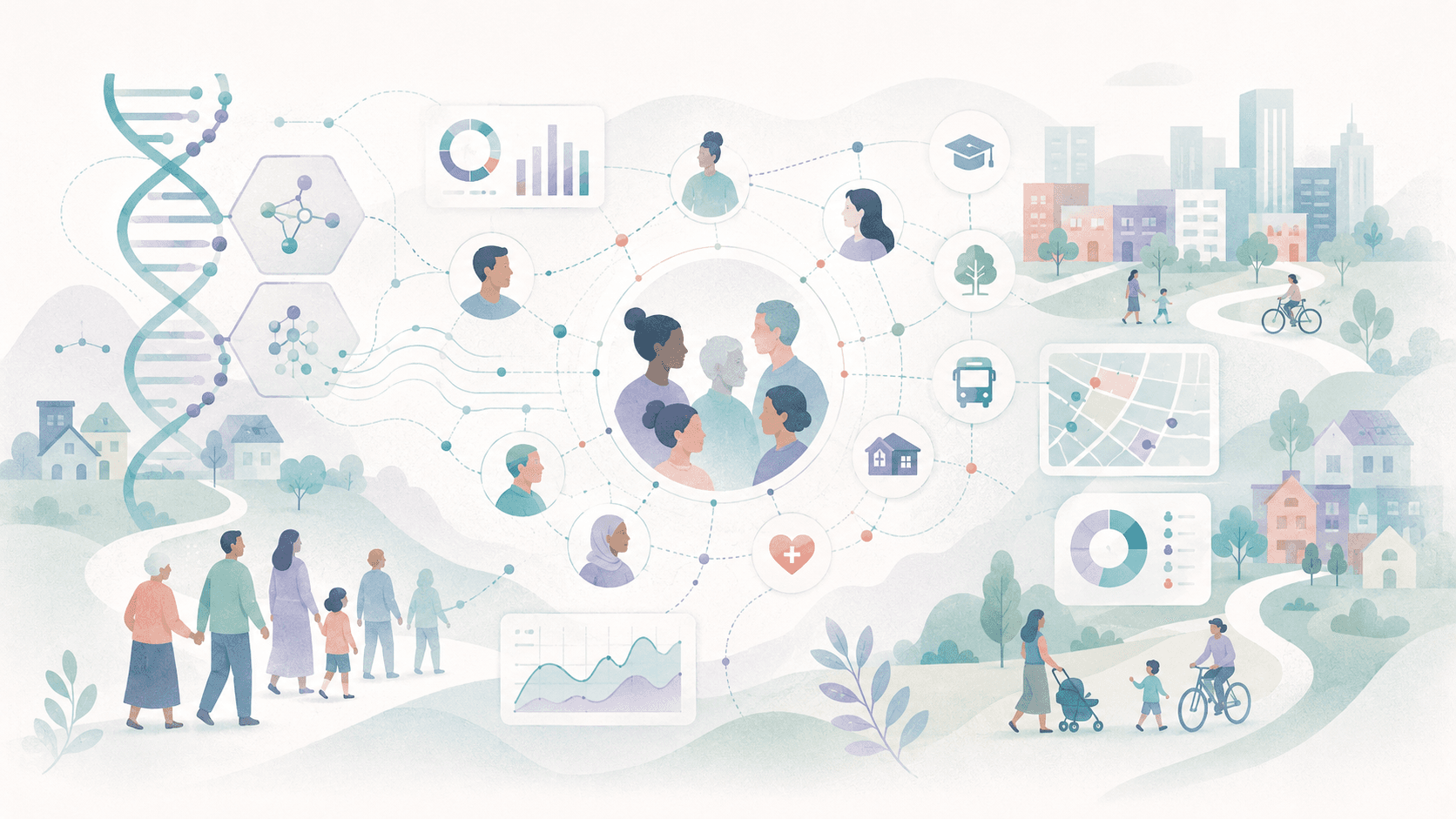
We examine how genetic susceptibility interacts with social, behavioral, and environmental context to shape health across populations and the life course—extracting meaningful social determinants of health and building inclusive, cross-ancestry models.
유전적 취약성이 사회 환경과 생활 행동, 물리적 환경과 맞물려 집단과 생애 전반의 건강을 만들어가는 방식을 탐구합니다. 건강을 좌우하는 사회적 결정요인(SDoH)을 찾아내고, 여러 혈통의 인구집단에 두루 적용되는 모델을 구축합니다.
Women's, Maternal & Lifecourse Health
여성·모성·생애과정 건강
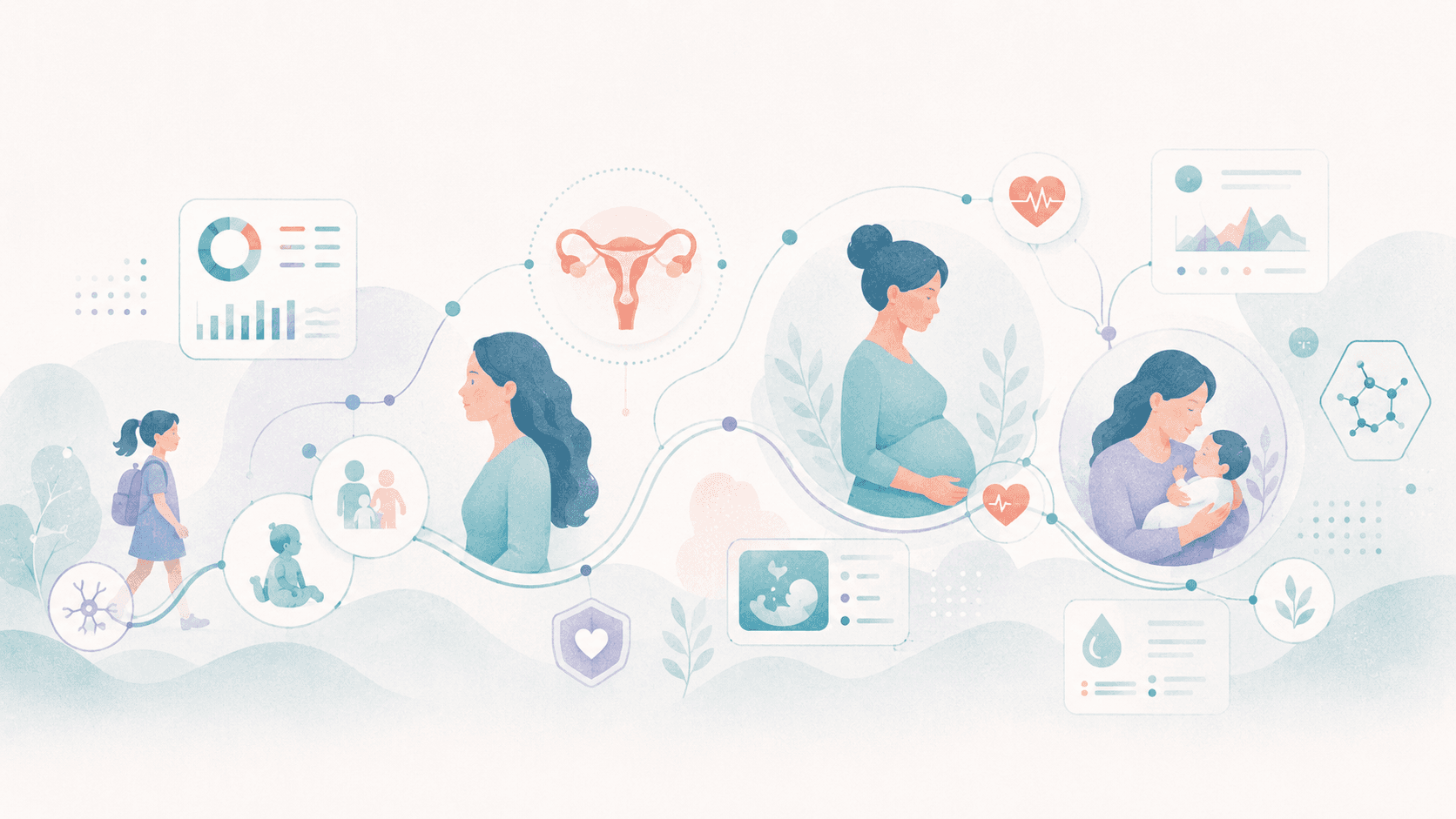
We investigate reproductive lifespan, pregnancy and perinatal complications, neonatal outcomes, and early-life exposures—linking genetic, clinical, and developmental data to protect health from the earliest stages of life.
생식수명, 임신과 주산기 합병증, 신생아 예후, 생애초기 노출을 연구합니다. 유전 정보와 임상기록, 발달 데이터를 연결하여 생애 가장 이른 시기부터 건강이 어떻게 결정되는지 밝힙니다.
Biological Aging & Resilience
생물학적 노화와 회복탄력성
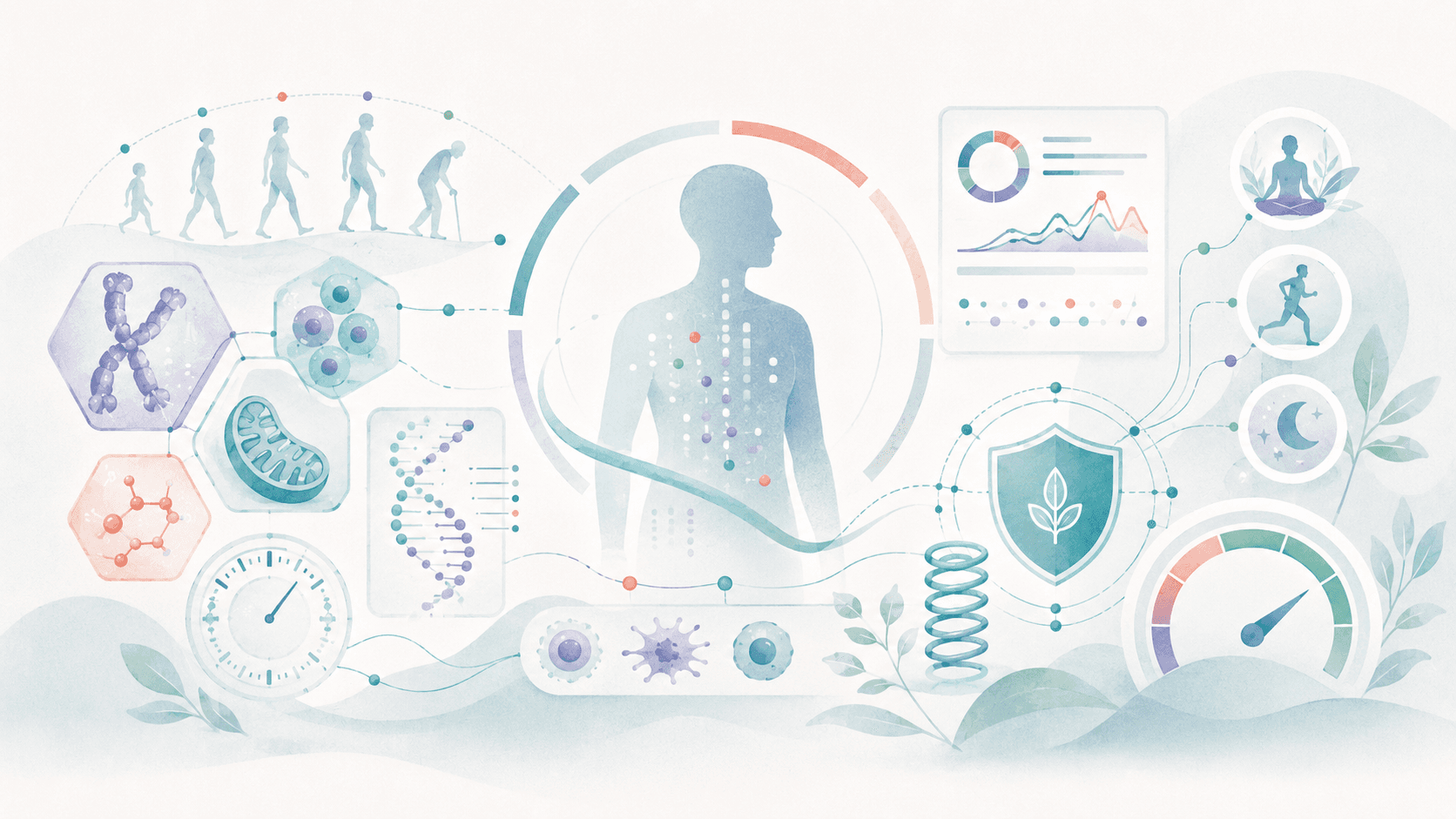
We quantify how the body ages and recovers—through molecular aging clocks, aging-acceleration metrics, and the reverse-aging and salutogenic processes that build resilience—to understand not just how long we live, but how well.
분자 기반 노화시계와 노화가속 지표로 몸이 늙는 속도를 재고, 회복탄력성을 만드는 역노화와 건강생성(salutogenesis) 과정을 함께 살펴봅니다. 얼마나 오래 사는가가 아니라 얼마나 건강하게 사는가를 규명합니다.